If you’ve ever paid more than you anticipated when ordering groceries online, federal regulators want to hear from you.
As part of an investigation into price-gouging concerns, the Federal Trade Commission is asking for input from shoppers about the often-hidden costs of buying groceries online.
“The FTC is seeking written comments, including data, evidence, analyses, and arguments, to help determine how best to prevent unfair or deceptive acts or practices,” the agency announced yesterday. Public input will provide investigators with real-world examples of the problems they seek to address.
“Consumers are not always made aware that prices are marked up or that they would need to parse through disclosures to understand the various ways in which prices may vary,” the FTC explained.
It’s the first public acknowledgment that the agency is considering nationwide rules to regulate online grocery pricing transparency, since it was first reported late last year that the FTC was looking into it.
The FTC’s interest came after widespread reports that Instacart was using algorithmic pricing experiments to charge different prices to different customers buying the same groceries from the same sites online. Instacart later announced it was ending its experiment, but the damage was done, as shoppers who already presumed that online grocery shopping would cost them more, began to wonder just how much more they were being charged.
“At least one report found that ordering groceries through an online delivery platform resulted in total costs that were 30–50% higher than shopping in-store for the same groceries,” the FTC said. Prices of individual items can be marked up, and that’s in addition to various fees that can significantly add to the final cost.
“Some delivery platforms charge both ‘delivery’ fees and ‘service’ fees, leading many consumers to wonder what ‘service’ they are paying for besides delivery,” the FTC noted. And “often, the existence and cost of these fees are not disclosed until checkout, if at all.” That’s in addition to tips that shoppers are encouraged to provide to delivery workers.
So the agency is asking for shoppers’ firsthand experience when it comes to ordering groceries online. Do grocery delivery companies “clearly and conspicuously disclose the total price?” they want to know. Do they “conspicuously disclose the existence, nature, purpose, refundability, or recipient of any fees, charges, or other costs”? Do they disclose whether online prices are different than those for the same items in store, or than those charged to other shoppers? And do they adequately explain the terms and conditions on “applicable discounts or promotions”?
The FTC points out that several states already require any online sellers to clearly disclose any additional fees when advertising prices. New York lawmakers recently passed a bill that would have specifically required grocery delivery services to “clearly and conspicuously” disclose when they mark up prices for the groceries they deliver. But the governor vetoed it, arguing that forcing businesses to comply “may lead to increased costs for consumers at a time when the cost of groceries is already a substantial burden.”
The FTC says it may be time for “uniform rules that apply to all food delivery platforms across the country.” The agency plans to publish its call for public comment in the Federal Register, after which shoppers will have 30 days to submit comments. And then administrators will consider those comments when drawing up potential rules for online grocery pricing going forward.
“Online grocery fees that are unclear, inconsistently disclosed, or revealed only at the last moment before consumers make a purchase distort competition and harm consumers,” Director of the FTC’s Bureau of Consumer Protection Christopher Mufarrige said in a statement. As opposed to “unlawful grocery delivery pricing that obscures the true cost of groceries,” he said, “clear and truthful pricing is essential to competitive markets.”
Most online grocery shoppers already know that convenience comes at a cost. Federal regulators may soon ensure we all know what that cost actually is.
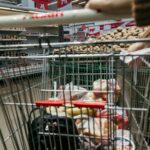
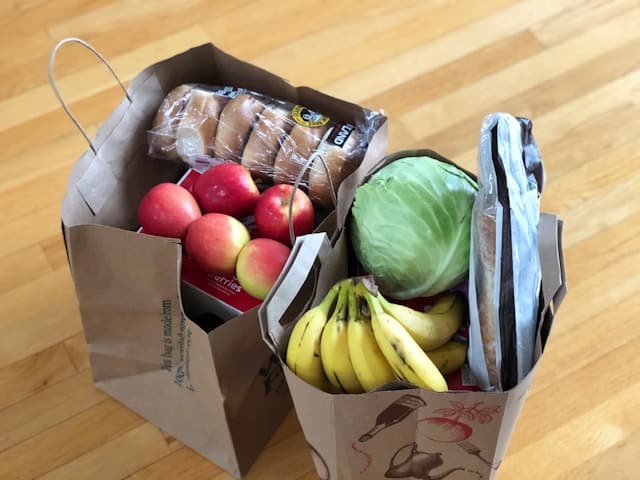
Image source: Maria Lin Kim on Unsplash