They say the rich are different from you and me. And that extends to the places they choose to get their groceries.
YouGov has analyzed the grocery purchase habits of Americans, based on their income level. And it turns out different shoppers with different incomes have very different favorites.
“Higher-income Americans make up a relatively small share of the population,” YouGov said in announcing its findings. “But their shopping habits reveal some notable differences in how they approach grocery spending, where they shop, and what they buy beyond food.”
An annual income of $150,000 or more may not make one super rich, but it’s enough to be well above average. So that’s how YouGov defined higher-income. And 10% of survey respondents placed themselves in this category.
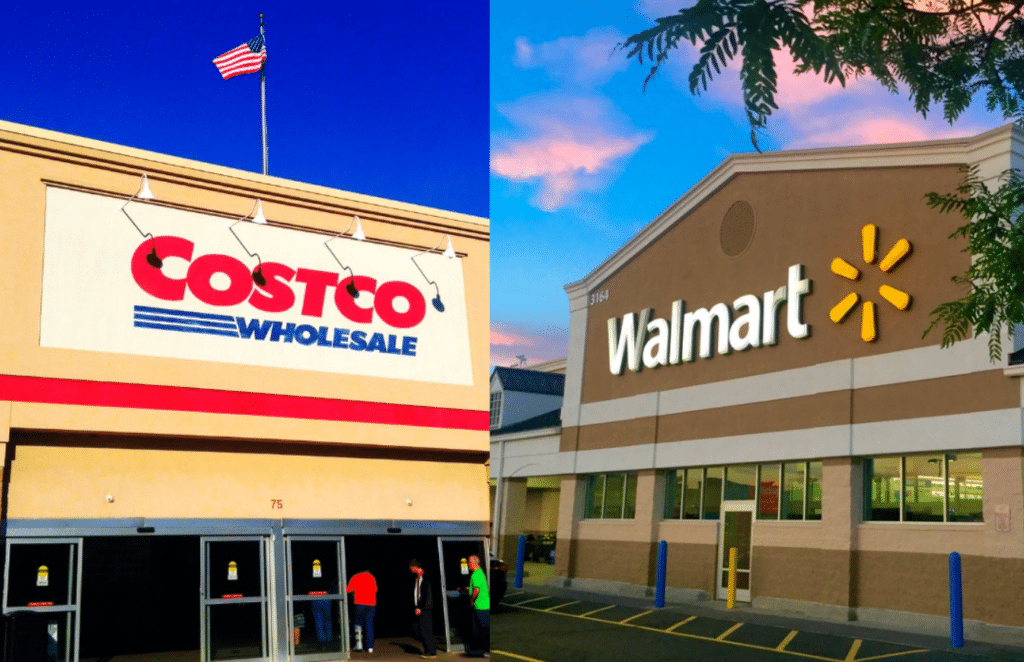
While the average American’s favorite place to go grocery shopping is Walmart – with 32% of middle- and lower-income survey respondents saying so – higher-income shoppers were more likely to name Costco as their favorite. 11% prefer Costco, compared to just 5% of their lower-income counterparts.
That corresponds with a separate recent survey from Morning Consult, which compiled lists of the “must trusted” brands. Each was scored by the share of respondents who said they trust a brand minus the share who said they don’t. Among higher-income shoppers, Costco was the second most-trusted brand of all, with a “trust score” of 65.3. Among those with incomes between $50,000-$100,000, Costco was much further down the list with a score of 58.2. And Costco didn’t even appear in the top 15 for those making under $50,000 a year.
Going back to the YouGov survey, the next most popular grocery stores tend to arrange themselves by income level – lower-income shoppers are more likely to prefer the low-cost ALDI, while higher-income shoppers like the higher-priced Publix and Safeway. And Trader Joe’s shows one of the greatest disparities, with a three-point difference between the 5% of higher-income shoppers who do most of their shopping there, compared to 2% of other shoppers.
That, too, shows up in the Morning Consult survey, where Trader Joe’s has a trust score of 59.7 among higher-income shoppers, while it doesn’t appear on the list of favorites at all among lower-income shoppers. “Trader Joe’s and Costco’s high trust with high earners demonstrates how deal-minded shopping carries value even among those with more to spend on premium goods,” the report noted.
YouGov also found that higher-income grocery shoppers spend more, and shop more often. A third say they shop several times a week, compared to a quarter of middle- and lower-income shoppers. Another quarter of middle- and lower-income shoppers said they only shop a few times a month, compared to only 18% of higher earners who said the same.
“The larger difference, however, is in weekly grocery spending,” YouGov found. More than half of higher-income shoppers said they spend more than $150 per week on groceries, compared with 28% of middle- and lower-income shoppers. Nearly half of those with lower incomes spend less than $100 a week, compared to just 22% of higher earners who said the same.
While Costco and Trader Joe’s are higher earners’ choice, and Walmart and ALDI are the favorites of lower earners, they tend to meet in the middle, where Kroger was named as the favorite store by 10% of shoppers of all income levels.
But, again, the YouGov survey defined higher-income shoppers as those who earn at least $150,000. What about the real higher-income shoppers – the super rich who don’t care for Costco or Trader Joe’s and wouldn’t be caught dead at a Kroger?
The Southern California-based grocery chain Erewhon has gotten a lot of buzz lately as the store of choice for celebrities – the place to see and be seen buying gourmet goods at exorbitant prices. The chain has become known for indulgences like $21 smoothies and individually-wrapped Japanese strawberries for $19 apiece. For those who can afford to pay it, the high prices are part of the appeal.
Then there are those for whom price is no object at all. The New York Times last year visited several grocery stores in the Hamptons, where stores offer goodies like $100-a-pound lobster salad and Japanese musk melons that could set you back as much as $400 each. One store, apparently adopting the adage “if you have to ask, you can’t afford it,” doesn’t even bother posting prices. “We don’t do little signs,” the manager sniffed.
Compared to that, the modest luxury of shopping at Costco and Trader Joe’s is looking pretty good. For those who can’t even afford that luxury, a single Japanese musk melon in the Hamptons costs as much as an entire month’s worth of groceries at Walmart or ALDI.
Upper- and lower-income shoppers may have different favorites when it comes to grocery shopping. But when it comes to the price of smoothies, lobster salad and melons – the super rich may have more dollars than sense.
Image sources: JeepersMedia / JeepersMedia