What’s your favorite grocery store? More importantly – what’s your second-favorite?
A popular grocery chain is already earning acclaim as the best in the country. Now, it’s apparently solidifying its success by becoming everyone’s second choice as well.
Consumer Edge is out with its “U.S. Grocery Outlook 2026” report, in which it gauges grocery shoppers’ habits and where they prefer to shop. It finds that traditional supermarkets are losing ground to discounters on the low end, to specialty grocers on the high end, and everyone is meeting in the middle at Trader Joe’s.
Echoing an earlier report by the commercial real estate company JLL, Consumer Edge found that grocery shoppers are gravitating away from traditional grocery stores, but they’re heading in two different directions – seeking low prices at discounters like ALDI and Lidl, or seeking higher quality at somewhat higher prices at specialty grocers like Sprouts or Whole Foods.
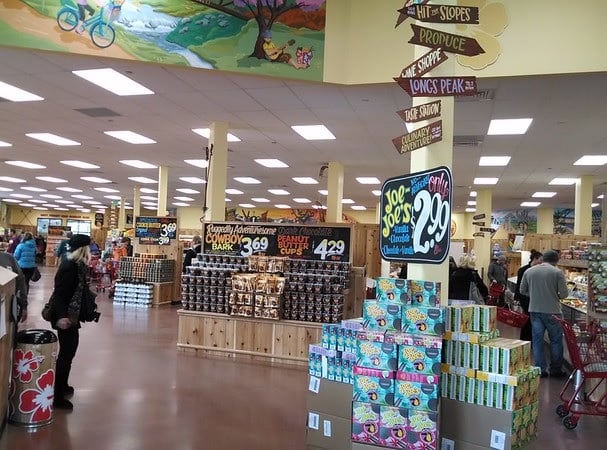
Unique to Consumer Edge’s report, though, is how Trader Joe’s fits into all of this. The quirky grocery chain was once again named number-one in the American Customer Satisfaction Index’s recent annual shopper survey. “The brand has built a reputation for affordability, an attribute that is increasingly resonating as consumers grow more price conscious,” Consumer Edge noted. Not only has that contributed to an increase in sales, while the broader grocery category declines, but shoppers who tend to get their groceries from one store, are increasingly getting them from Trader Joe’s as well.
“Many shoppers who buy groceries at competitors still spend a significant portion of their grocery budget at Trader Joe’s,” Consumer Edge found. “For example, Sprouts Farmers Market shoppers allocate 48% of their specialty grocery spend to Trader Joe’s, and Wegmans shoppers allocate 47%.” This puts Trader Joe’s in the “unique position as the default secondary destination for specialty grocery shoppers regardless of where they primarily shop.”
That’s because Trader Joe’s appeals to shoppers on both ends of the spending spectrum – those looking to save money, and those looking for unique offerings. The grocery chain succeeds by offering a “tightly curated, private-label-driven assortment,” the report concluded, “at price points that feel accessible.”
That last part is particularly important to shoppers who’ve changed their habits due to inflation. Many in recent years have been cutting back and lowering their expectations, trading down to lower-priced discounters. But “discount grocer share has plateaued, suggesting the value trade-down may be stabilizing,” the report found. Specialty grocers are gaining ground as shoppers look for value.
And “what that means to different people varies,” Consumer Edge noted. “Hard discounters continue to capture trade-down traffic from traditional supermarkets, while certain specialty players are benefiting from a curated assortment, private label depth, and a perception of quality-per-dollar that resonates with cost-conscious but discerning shoppers.” That leaves traditional supermarkets caught in the middle, losing ground to competitors on either end.
“What’s happening in grocery isn’t just about price,” Michael Gunther, SVP of Research & Market Intelligence at Consumer Edge, said in a statement. “Shoppers are making more deliberate choices about where they spend their money, and they’re gravitating toward retailers that give them a clear reason to be loyal – whether that’s unbeatable value at a hard discounter or a curated, private-label experience at a specialty grocer.”
Traditional supermarkets are the ones with the most to lose. “And the data suggests that pressure isn’t going away,” Gunther said. “The grocery retailers best positioned for 2026 are those with a distinct identity and a customer base that keeps coming back.”
And Trader Joe’s wins there, too. One quarter-year after shopping at Trader Joe’s for the first time, Consumer Edge found that 40% of customers pay a return visit. That’s on par with competitors like ALDI and Wegmans. But over time, Trader Joe’s pulls ahead – one year after a first purchase, it has the highest customer retention rate of anyone, suggesting that Trader Joe’s shoppers are more likely to become loyal customers.
So Trader Joe’s may not have absolutely everything you need to be your one-stop grocery shop. But if it’s your next-stop grocery shop – Trader Joe’s may find that a consistent second may be as good as a win.
Image source: Aranami