It’s one of the most annoying parts about buying groceries online. Not only can there be delivery or membership fees, but you may end up paying more for the very same items online than you would if you bought them in the store, and never even know it.
One grocery delivery company is trying to change that, so you pay the same price no matter how you choose to shop.
Instacart used to rely on shoppers who were willing to pay a premium to get their groceries delivered to their door. But with grocery prices on the rise, big spenders are harder to find. And that could threaten Instacart’s entire business model.
So the company has been pressuring its partner retailers to offer “same-as-in-store pricing.” And it says that effort is beginning to pay off – for Instacart shoppers, and for Instacart itself.
“On our platform, retailers that price items at in-store parity consistently grow faster on average than those with markups,” Instacart wrote in a recent letter to shareholders. “This insight is encouraging our partners to embrace more competitive pricing strategies.”
The St. Louis-based grocery chain Schnucks recently moved to same-as-in-store pricing on Instacart’s platform. So did Heritage Grocers Group, the owner of the ethnic grocery chains Cardenas Market, El Rancho Supermercado and Tony’s Fresh Market. And Pattison Food Group, the owner of hundreds of grocery stores in Western Canada, recently launched on Instacart with in-store pricing from the very start.
“We are working with all retailers to continue to dynamically adjust our markups, and with some, go all the way to price parity. And we’ve made some progress there,” Instacart CEO Fidji Simo told investors.
It’s never really been a secret that many online grocery prices are marked up. Having someone do your grocery shopping for you doesn’t come cheap, after all. But when added to delivery and service fees, those extra charges can really add up.
That’s especially true when you don’t know exactly how much more you’re actually paying. So New York state is currently considering legislation that would require online grocery delivery services to disclose precisely how much more they’re charging you for each individual item.
“This legislation would require grocery retailers and/or delivery services to state whether the online price is greater or less than the in-store price,” a memo accompanying the bill reads. “The goal is to provide the consumer transparency in deciding if they want to pay a higher price for purchasing products online. It does not outlaw the practice, just requires companies be open and transparent about what mark-ups they are charging.”
Instacart has taken the opposite approach. Instead of calling attention to marked-up prices, it gives retailers a shout-out with an “Everyday Store Prices” banner when they charge the same in-store and online – a subtle way, perhaps, to encourage other retailers to do the same.
Add in-store pricing to coupons and promotions that can be used for Instacart orders, and suddenly, buying your groceries online starts looking a lot more affordable.
And profitable, for Instacart. In the most recent quarter, the company says it fulfilled 82.7 million orders worth more than $9 billion, both up more than 10% over the same time last year.
“Grocery prices continue to be top of mind for consumers, and we know that working with retailers to offer their customers affordable prices is key to helping them drive faster growth and accelerate online grocery adoption,” Instacart’s letter to shareholders read. And “by creating better customer experiences, deepening retailer partnerships, and leveraging our data in innovative ways… our strategy is working.”
So what was once an expensive luxury, is becoming a more affordable experience. If you choose to have your groceries delivered, at least one delivery service wants you to know you can now fill your pantry without emptying your bank account.
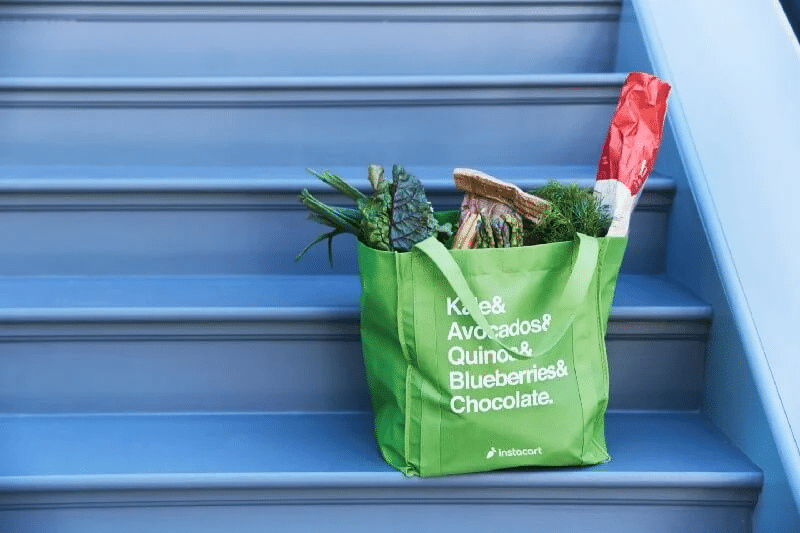
Image source: Instacart