Millions of grocery shoppers have reason to be cautiously optimistic – or nervously apprehensive – as a landmark new law is now months away from taking effect.
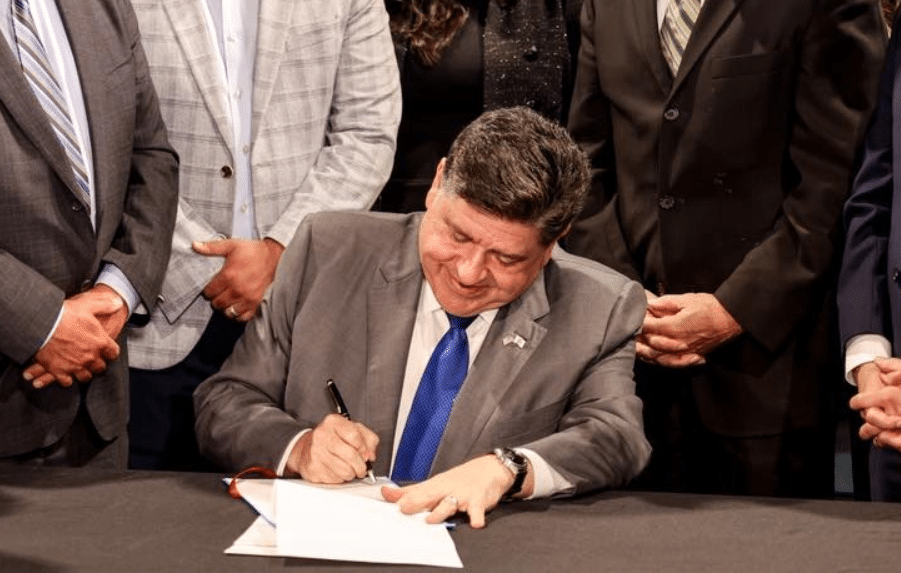
Illinois Governor JB Pritzker has now signed into law a first-of-its-kind statewide measure that seeks to make digital-only grocery deals more accessible to those without digital access or competency. That’s what’s supposed to happen, at least. But it could end up having the exact opposite effect.
In theory, when the law takes effect on January 1st, shoppers throughout the state will have easier access to discounts on their groceries. In practice, though, the wording of the law, and an apparent lack of knowledge about how coupons are supposed to work, means it could get a lot more complicated once the new year rolls around.
The measure, first proposed more than three years ago, was one of a number of similar bills introduced in several state legislatures at around the same time. But all of them seemed to have stalled out – until Illinois lawmakers overwhelmingly passed their version this spring and sent it to the governor’s desk.
In the meantime, a similar law was implemented at the local level by the city of San Diego last year. Like that one, Illinois’ law will require grocery stores to come up with alternative ways to give shoppers advertised discounts that were previously only available by activating the offer online or in the store’s app. If you can’t or don’t want to go online to activate the offer, stores must provide another way for you to get the same deal as those who do.
But Illinois’ law has some key differences. So shoppers there may find themselves becoming the guinea pigs, as other states watch to see whether Illinois’ new law turns out to be a prudent plan or a woefully misguided move.
It all comes down to the difference between advertised digital deals and all digital discounts. Many grocery chains these days feature bold-priced specials in their weekly ads that look like sale prices available to all, but are really just the final price that a loyalty program member would pay if they log into their account to activate the offer first.
Some consumer groups complained this practice was unfair, misleading, and bordering on false advertising – particularly for seniors and others who aren’t digitally-savvy enough to activate these offers online.
So several grocery chains came up with compromises. Some will honor digital deal prices upon request. Kroger introduced printed “scan sheets” featuring all of that week’s advertised digital deals, which will be activated when a single bar code on the sheet is scanned at the checkout. Stop & Shop rolled out Savings Station kiosks where shoppers can use an in-store touchscreen to activate that week’s digital deals. And Raley’s and Save Mart did away with advertised digital-only deals altogether, making all advertised prices available automatically with no online clipping or activating required.
But those solutions only apply to the few dozen deals advertised in a store’s weekly circular. These same grocery chains have dozens or hundreds of digital coupons available to clip on their websites or apps. San Diego’s law isn’t meant to apply to them. Illinois’ law is.
According to the measure’s co-sponsor, “the bill addresses all digital coupons,” Illinois state Senator Laura Ellman’s office explained to Coupons in the News earlier this year. “Digital coupons have become more common; however, not all consumers can easily access them,” she later added in a statement. “If it’s offered, it should be usable to all, especially when a digital coupon can make a difference.”
The legislation’s House co-sponsor suggested the same. “Dealing with digital coupons can be a hassle. Trying to navigate the app, find the right deal, and electronically clip the coupon is frustrating,” Rep. Janet Yang Rohr said. “With this legislation, we’re saving customers time and money by having retailers offer practical, non-digital redemption options that are easily accessible.”
As worded, the law requires grocery retailers to “ensure that the benefits of a digital promotion” – defined as “any discount advertised, offered, delivered, or redeemed by electronic means,” including “any coupon or promotion” in an electronic or digital format – “are provided to any eligible consumer.” It will be up to the retailers to provide all shoppers with a “practical means of receiving the digital promotion in the ordinary course of a transaction” without requiring them to go online to get it.
But the manufacturers who provide these digital coupons want you to go online and clip them first – just like they have always wanted you to scroll through printable coupon galleries or page through printed Sunday coupon inserts. If seeing a coupon prompts you to clip it, add the product to your list, and buy it when you otherwise might not have, then the coupon worked. In contrast, giving away the benefits of a coupon to shoppers who never clipped it, never saw it, and never even knew it was available, defeats the very incentivizing purpose of a coupon if those shoppers were going to buy the product anyway.
Illinois’ law would require retailers who offer digital coupons to do just that – or to take more drastic measures.
While San Diego lawmakers said their law was only meant to apply to advertised digital deals, one major grocery chain took a more cautious approach. Albertsons-owned stores pulled the plug on nearly all of their digital coupons within the city limits, explaining that “because many of the coupons offered through our app are offered by manufacturers, and because many manufacturers have not provided an in-store alternative, we have been forced to remove those offers from our digital app in our San Diego City stores to ensure parity for in-store customers.”
Albertsons made that move out of an abundance of caution, even though San Diego lawmakers insisted it wasn’t necessary. Grocers in Illinois, however, may not have a choice. And guess who the largest traditional grocery chain with the most stores in the state of Illinois is?
Albertsons owns 184 Jewel-Osco stores in Illinois. And considering it cut off access to most digital coupons in response to an ordinance that didn’t require it to make all digital coupons available to all shoppers, what will it do in response to a law mandating that it do so? Albertsons representatives have repeatedly refused to comment about their plans come January.
But Albertsons isn’t the only one that’s going to have to figure out a plan. The law will apply to all retailers for whom groceries make up a majority of their sales. That excludes certain retailers like Target, most drug stores and dollar stores. But it includes plenty of other grocery chains with digital coupon programs and stores in Illinois, like Kroger, Meijer, Whole Foods, Hy-Vee, Schnucks, Save A Lot, Woodman’s, Niemann Foods, and – if Walmart Cash is considered a “coupon or promotion” – Walmart itself.
So those retailers in Illinois have six months to either figure out a way to offer all digital discounts to every single shopper without manufacturers objecting, or have their attorneys figure out a way to parse the wording of the law so they can comply without giving away all coupon discounts to everyone – or simply throw up their hands and get rid of digital discounts altogether and make everyone pay full price.
Millions of shoppers will soon find out whether their elected representatives have found a clever new way to save them money – or whether those lawmakers’ well-meaning efforts will end up costing them dearly.
Image source: Office of Governor JB Pritzker