
Maryland grocers were in sync with supporters of the state’s newly-signed Protection from Predatory Pricing Act – until they weren’t. California grocers made peace with San Diego’s recent Grocery Pricing Transparency Ordinance – until some of them didn’t. And Illinois grocers say they’re okay with that state’s Sale Price Ad Act – but will they still be, if it becomes law?
Lawmakers’ recent efforts to protect shoppers from higher prices at the grocery store are running up against retailers’ efforts to conduct business. And the consumers whom both purport to be protecting, are finding themselves caught in the middle – wondering who’s really looking out for them.
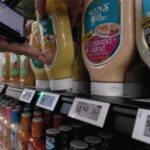
Most recently, Maryland’s governor last week signed into a law a measure that prohibits grocers from “using dynamic pricing or an individual’s personal data to set higher prices.” The bill was born out of fears that retailers could use electronic shelf labels to change prices for different shoppers at different times. As originally written, though, the measure could have prevented grocers from offering personalized prices or loyalty program discounts, by banning any consideration of “a consumer’s behavior or characteristics” in setting prices.
The Maryland Retailers Alliance initially opposed the bill. Then its lobbyists worked with lawmakers to get clarifications and exceptions added, to the point that it expressed satisfaction with the ultimate version. “The final bill reflects a workable framework that achieves the stated policy goal of prohibiting the use of consumer data to increase prices while preserving the ability for retailers to offer discounts and promotions that benefit consumers,” the group said in a statement.
And then Governor Wes Moore burst that bonhomie when signing the bill. “Today, Maryland is putting an end to any forms of price manipulation,” he said. “People deserve to know that the price that they pay is not different from the customer who walked in just before them, or different from the customer that walks in right after them. People deserve to know that their data will not be used against them to charge them more.”
Except that’s not happening, the suddenly-not-so-satisfied Maryland Retailers Alliance subsequently pointed out, nor does the new law even address that possibility.
“In describing the issue, Governor Moore stated that two individuals could be charged different prices for the same item based on personal data. This characterization is inaccurate,” the group said in response to the governor’s comments. “The newly enacted ‘Protection from Predatory Pricing Act’ does not address or prohibit individualized grocery pricing as described. Suggesting otherwise misrepresents both the scope and the legal effect of the legislation.”
Their statement went on to point out that hotels, airlines and rideshare services “are actually where such pricing practices are most prevalent and where policy discussions would be more appropriately focused.” Pointing the finger at grocery retailers “is inconsistent with the economic realities of the industry,” the group went on, poking Moore one more time by saying “we urge public officials to ensure that statements regarding consumer protection and pricing practices reflect the law as written and enforced.”
The situation was similar in San Diego last year, where retail groups opposed a proposed grocery regulation – in this case, targeting digital-only grocery discounts – only to help craft a revised bill that went on to become law, and later deciding it might not have been such a good idea after all.
The original version of San Diego’s Grocery Pricing Transparency Ordinance would have required grocery stores to provide paper versions of all digital coupons, for the benefit of shoppers without digital devices. The California Grocers Association helped get the measure rewritten before it took effect, so that it only required grocers to offer some alternate way for shoppers to access advertised digital deals, without the burdensome requirement of offering paper coupon equivalents.
“The industry appreciates the San Diego City Council’s willingness to seek out a middle ground that serves the community and its grocers,” the group said in a statement to Coupons in the News at the time. “The updated ordinance will allow California grocers to continue offering the digital coupons customers count on to save money at the store while adding new methods to better support shoppers who might not be comfortable with or have access to technology.”
And then Albertsons-owned Vons cut off access to almost all digital coupons in all of its San Diego stores, saying the ordinance’s phrasing was too ambiguous, and the only way to comply was by eliminating digital coupons for everyone – exactly the opposite of what the California Grocers Association optimistically said would happen.
Suddenly, the CGA didn’t sound so pleased anymore about the legislation they and city leaders had helped craft. “The more we have to do to figure out how to” comply, “that’s just going to make it more complicated and more expensive to operate grocery stores in your community,” the CGA’s vice president of government relations Daniel Conway told the San Diego Union-Tribune. “If you overreach,” he said of otherwise well-meaning government officials, “the unintended consequences of that overreach can completely undermine your premise” of wanting to help consumers.
So that brings us to Illinois. Last month, the state House passed a bill similar to San Diego’s, requiring grocers to make all digital promotions available to all shoppers. Supporters in the state Senate are now racing to get it passed there, and sent to the governor’s desk, before the legislative session ends in the coming weeks. If signed, it would become the first statewide law of its kind.
Similar to what happened in San Diego, and Maryland, retail groups initially balked at the proposal, which also would have required grocery stores to provide paper versions of all digital coupons. Then they helped to get it rewritten to remove the paper coupon requirement, and appeared to make peace with it.
“We worked closely with many organizations to adjust the language to maintain our original intent and yet make the bill workable for retail,” Donna Wandke, Chief of Staff for the bill’s sponsor Representative Janet Yang Rohr, told Coupons in the News. One of those organizations, the Illinois Retail Merchants Association, “appreciates the collaborative work with Representative Yang Rohr… to ensure consumers are able to receive discounts and benefit from affordability tools, while preserving the flexibility retailers need to serve their customers effectively,” the group told Coupons in the News.
But there are potential red flags in the Illinois bill that could prompt retailers to reconsider their position if it becomes law, just like they did with the measures in San Diego and Maryland. Most notably, the bill says retailers must ensure that all available digital discounts are applied to all shoppers’ purchases – not just those that are advertised in store or in a weekly circular. “The bill addresses all digital coupons,” the office of co-sponsor Senator Laura Ellman confirmed to Coupons in the News.
Are Illinois grocers and their manufacturer partners really okay with having to automatically apply all digital coupon discounts to all shoppers, regardless of whether those shoppers clip them, ask for them, or are even aware they exist? Wouldn’t such a mandate prompt Albertsons-owned Jewel – the largest grocery chain in Illinois – to eliminate most digital coupons in response, just like Albertsons-owned Vons did in San Diego?
One might think so. Yet Albertsons representatives and Jewel spokesperson Mary Frances Trucco have ignored repeated requests for reaction. And when pressed on whether it’s really satisfied with the bill as written, the Illinois Retail Merchants Association clammed up and said tersely that it “has nothing to add beyond the previous statements provided.”
To the everyday constituents these particular measures are meant to help, it may appear unseemly that those who are being regulated, are being granted such an active role in determining how those regulations are written. But that’s often how it works.
What’s more curious, is why those being regulated appear unconcerned about the potential unintended consequences of those regulations – until it’s too late. Retailers in Maryland who said they were okay with the state’s new pricing law, now don’t like how the governor is characterizing it. Retailers in California who said they were okay with San Diego’s digital deal law, now don’t like its ambiguity that could put them at risk of noncompliance. And retailers in Illinois who say they’re okay with that state’s digital coupon law may find that they, too, have regrets – and the shoppers who are hoping to come out ahead, could end up being the ones to pay the price.
Image source: Illinois Office of the Architect of the Capitol