
Seven states have proposed it. None have passed it. But one state has now come closer than any other, to enacting a law that would make digital-only grocery deals more accessible to the non-tech-savvy.
Or, it could make digital coupons and deals less accessible for everyone – depending on how it’s interpreted and enforced.
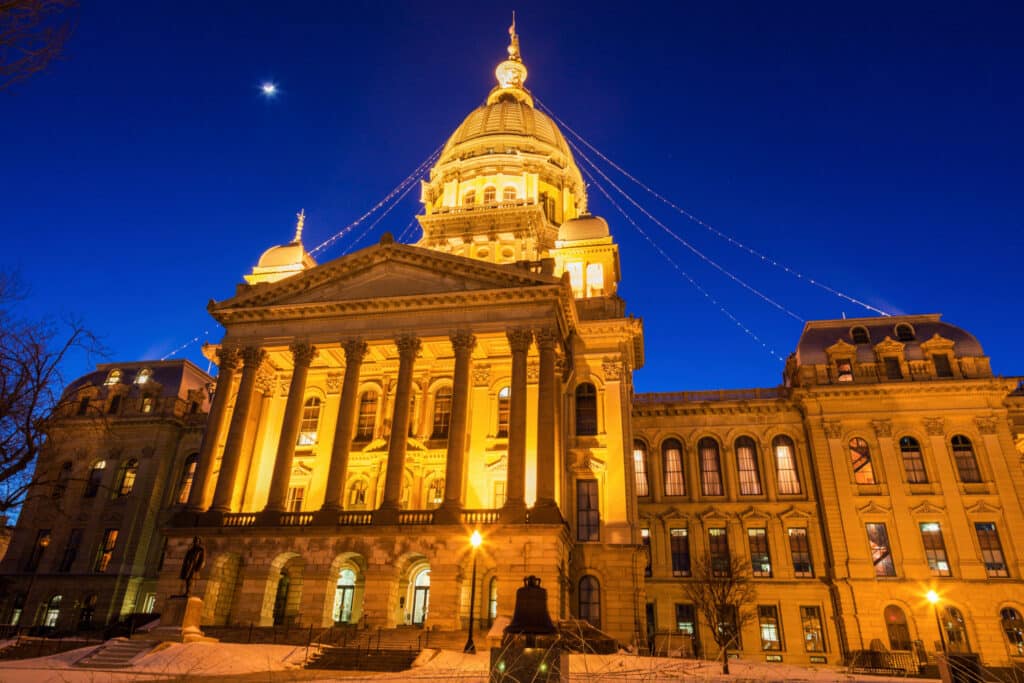
The Illinois state House has unanimously passed a bill that would require grocery chains offering digital promotions to make them available to all shoppers, whether or not they have an app, internet service or their own digital device. By a vote of 105-0, lawmakers have sent the measure to the state Senate. If it passes there and is signed by the governor, a ban on digital-only grocery deals could become law in the Land of Lincoln.
After New Jersey, Illinois was the second state in the country to propose such a measure three years ago. But it languished, never progressing beyond the discussion stages, until it gained momentum this year. That was after the issue had shifted to the local level and San Diego became the first city in the country to enact a digital deal ordinance of its own.
The Illinois bill’s sponsor wants to do what San Diego did, but statewide. Democratic state Representative Janet Yang Rohr emphasized that more inclusive grocery discounts are needed during the current affordability crisis. “For families across the state, money is tight and expenses are high,” she said after the bill passed. “People are looking for ways to save money, and that’s why I introduced this legislation. It will save consumers money by guaranteeing that they have access to digital promotions while in the store.”
The idea is to ensure that shoppers who lack the ability to activate digital grocery deals, will be able to get those discounts in other ways, “including, but not limited to, automatic discounts, point-of-sale assisted discounts, the use of barcodes, quick response codes, or other unique identifiers.”
“Certain groups have particular difficulty accessing digital promotions, such as those who are visually impaired, do not have access to devices, or that are not technologically adept – often senior citizens,” Rohr said. “With this legislation, they will now have more equitable access to discounts, giving them the same savings offered to all consumers.”
As is often the case, though, the devil is in the details.
As passed by the House, the bill says grocers offering “any coupon or promotion” in a digital format “shall ensure that the benefits of a digital promotion are provided to any eligible consumer.”
If the idea is to provide equal access to the few dozen digital deals advertised in a weekly circular, and not the hundreds of digital manufacturer’s coupons that must be clipped on a store’s website or app, that’s not what the bill says. Consumer advocates have pushed for grocers to honor their advertised prices for those who can’t activate digital deals online. Clipping digital coupons, in contrast, is up to the shopper to do themselves. That’s what the authors of the San Diego ordinance insisted their intent was.
But the Illinois measure makes no distinction between advertised deals and digital coupons. And it doesn’t say that they must only be honored or applied upon request, but puts the burden on retailers, by saying they “shall ensure” that all available digital discounts are applied to all shoppers’ purchases.
That could mean that any time you purchase any grocery items in Illinois for which there happen to be digital coupons available, the store will have to come up with a way to apply those digital coupons to your order automatically, whether or not you clip them or are even aware they exist.
To Rohr, that appears to be a feature and not a bug. “Dealing with digital coupons can be a hassle,” she said. “Trying to navigate the app, find the right deal, and electronically clip the coupon is frustrating – and that’s if you manage to get internet service in these big box stores. With this legislation, we’re saving customers time and money by having retailers offer practical, non-digital redemption options that are easily accessible.”
Or, retailers could avoid the risk of noncompliance by disabling most digital coupons altogether, so no Illinois shoppers can access them at all. That’s what has happened at Albertsons-owned Vons in San Diego. “The ordinance requires that any digital discount offered to customers, other than personalized loyalty deals, must also be available in an in-store alternative format to provide equal access for all customers,” the retailer explained. “The majority of manufacturers will not provide an in-store alternative of their digital offers, which has resulted in a reduced number of promotions and digital deals available at our City of San Diego stores.”
A retail organization warned that the same thing could happen in Illinois, where Albertsons happens to be the state’s largest grocer, with 184 Jewel-Osco stores. San Diego retailers “cut back drastically on promotions, dropping from roughly 400 available discounts to about 30 in many locations,” Illinois Retail Merchants Association Vice President of Government Affairs Alec Laird told Central Illinois’ WAND-TV back in February. “So 92.5% of most digital promotions were just pulled.”
When asked for comment after the bill passed the House, though, Laird offered a different perspective. The Illinois Retail Merchants Association “values constructive engagement with lawmakers to develop balanced policies that strengthen Illinois’ retail sector and enhance the shopping experience for families across the state,” he told Coupons in the News. “IRMA appreciates the collaborative work with Representative Yang Rohr… to ensure consumers are able to receive discounts and benefit from affordability tools, while preserving the flexibility retailers need to serve their customers effectively.”
The original version of the bill would have required grocers to have paper versions of each and every digital coupon readily available in store, which retailers argued would be impractical and impossible. The IRMA worked with lawmakers to remove that requirement, allowing retailers to come up with their own methods of compliance. And the group now appears satisfied with that result.
But it appears unconcerned that the bill as passed could require retailers to apply all digital coupons automatically without any shopper involvement at all. As Ibotta’s Chief Legal Officer David Shapiro recently explained to Rhode Island lawmakers who are considering a similar measure, “coupons have always required consumer action.” Requiring retailers to give all coupon discounts to all shoppers “eviscerates the fundamental purpose of a digital coupon,” he argued. And it could force retailers to pull the plug on their digital coupon programs altogether.
It may all be moot, because the Senate is going to have to move fast. The state legislature is scheduled to adjourn at the end of next month. If the full Senate fails to pass the bill before then, there’s no chance of it becoming law this year.
If that’s the case, there’s always next year. Getting 105 lawmakers from different parties to agree on something is no small feat. Getting them to understand the unintended consequences of their well-intentioned actions, may prove to be an even greater challenge.
Image source: Illinois General Assembly