
When was the last time you bought a Sunday newspaper in order to get the coupons inside? When was the last time you even picked up a Sunday newspaper?
Subscriptions and purchases of printed newspapers have been declining precipitously over the years. Many publications are redirecting their efforts to their healthier digital subscription business. But digital newspapers don’t deliver digital coupons the way paper publications once delivered paper coupon inserts.
So what is a paper coupon insert publisher to do?
The publisher of the Save coupon insert – the last regularly-published printed coupon insert of its kind – is taking matters into its own hands.
R.R. Donnelley (RRD) is expanding its efforts to deliver coupons directly to consumers, bypassing newspapers that are now bypassing their historic role as coupon deliverers.
Hartford, Connecticut is the latest market where the local newspaper has quit delivering coupon inserts to non-subscribers. Typically, newspapers that distribute coupons, circulars and ads in their print publications will also ensure those ads and coupons are tossed onto the driveways or stuffed into the mailboxes of non-subscribers, in order to ensure maximum market penetration, and maximum ad rates.
The recent discontinuation of this program, though, along with similar ones run by newspapers in Phoenix and Washington DC, left millions of shoppers without access to weekly grocery circulars, retail advertisements and Save inserts – and left local grocers, retailers and the advertisers in the Save insert without access to millions of shoppers.
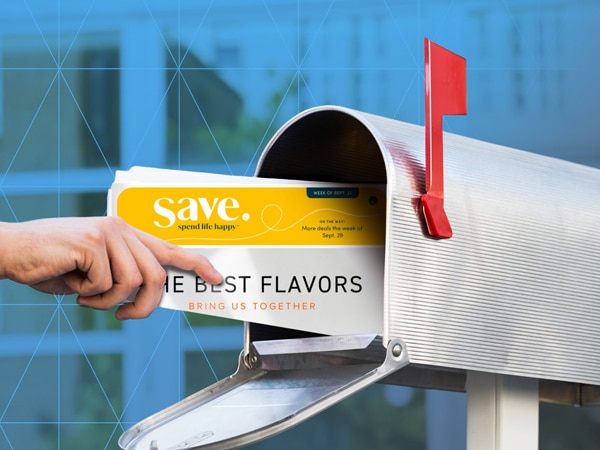
So RRD is now mailing these ads and coupons to millions of shoppers, on its own.
In Hartford, as in Phoenix and Washington, distribution now “moves to a 100% mail delivery model, routing all distribution entirely through the USPS to offer retail clients verified, reliable and accurate weekly delivery to home doorsteps,” RRD explained.
That means more than half a million households in the Hartford area alone that lost access to home-delivered circulars and coupons, are now receiving them again.
“We have long been committed to delivering the value consumers seek every day,” Curtis Tingle, President of Cooperative Print Media and Marketing at RRD, told Coupons in the News. “Adding distribution to this market fills a gap and gives consumers reliable access to valuable coupons and deals from grocers, retailers, restaurants, and other marketers.”
The Save insert began life 54 years ago as the first regularly-published, multi-brand coupon booklet distributed via newspapers. Newspaper readership was so robust back then, there was no need for alternate distribution methods.
But over time, the publisher began moving more of its coupons and ads to the mail, to keep distribution up amid falling newspaper circulation.
“Consumers had been trained for 40 years to look for those consumer packaged goods coupons in their newspaper,” the former CEO of RRD precursor Valassis said back in 2010. By delivering coupons and circulars directly to consumers who no longer subscribed to the newspaper, the publisher aimed to ensure that everyone could still receive them.
And now, in an increasing number of markets, delivery via mail is no longer an alternate method, but the sole method of distributing coupons and circulars. And if more newspapers suspend their advertising distribution model, or suspend their own printed publications altogether, RRD now has a plan on how to move forward. With many grocery chains having discontinued their printed weekly circulars, and other coupon insert publishers having dropped their printed publications, RRD continues to have the space all to itself, and insists it remains committed to printing paper coupons and delivering printed circulars as long as shoppers are receptive to receiving them.
“When local newspaper distribution channels close, regional grocers lose a vital link to their customers and families are left without weekly savings,” Tingle said. “Our solution bridges the gap at a critical time in our economy where deals and savings are essential.”
Many people long ago moved on to digital newspapers, digital circulars and digital coupons. But according to the most recent figures from Inmar, 46% of all coupons redeemed are still printed on paper. So there’s plenty of life left in the format. And by making sure those who prefer paper coupons can still receive them, RRD is looking to keep that format alive for years to come.
Image source: RRD












Sounds wonderful