One online coupon code finder claimed victory. Another retreated and got out of the coupon-finding business altogether. Now, nearly a year after the debate about the online affiliate marketing system burst into the open, a third online coupon code finder has agreed to settle a legal dispute, while strenuously denying it’s done anything wrong.
Capital One, owner of the Capital One Shopping browser extension, has reached a settlement with several online influencers who accused it of manipulating the affiliate marketing system to steal sales commissions they claimed rightfully belonged to them.
But Capital One is looking to make it very clear that the decision to settle should not be interpreted as an admission of wrongdoing.
“The plaintiffs’ filings included provably false allegations that Capital One Shopping was happy to defend itself against,” a Capital One spokesperson said in a statement provided to Coupons in the News. “Months of evidence collected in the litigation overwhelmingly confirmed that plaintiffs’ allegations were unfounded and that Capital One Shopping recognizes and follows industry rules – including rules that plaintiffs failed to acknowledge existed when they filed their lawsuit.”
But “litigation is time-consuming, expensive, and distracting,” the statement went on. “Reaching a settlement allows Capital One Shopping to put this litigation behind the company so it can focus on its core mission of helping consumers save time and money and helping our advertising partners promote their goods and services.”
The plaintiffs’ attorneys did not respond to requests for comment.
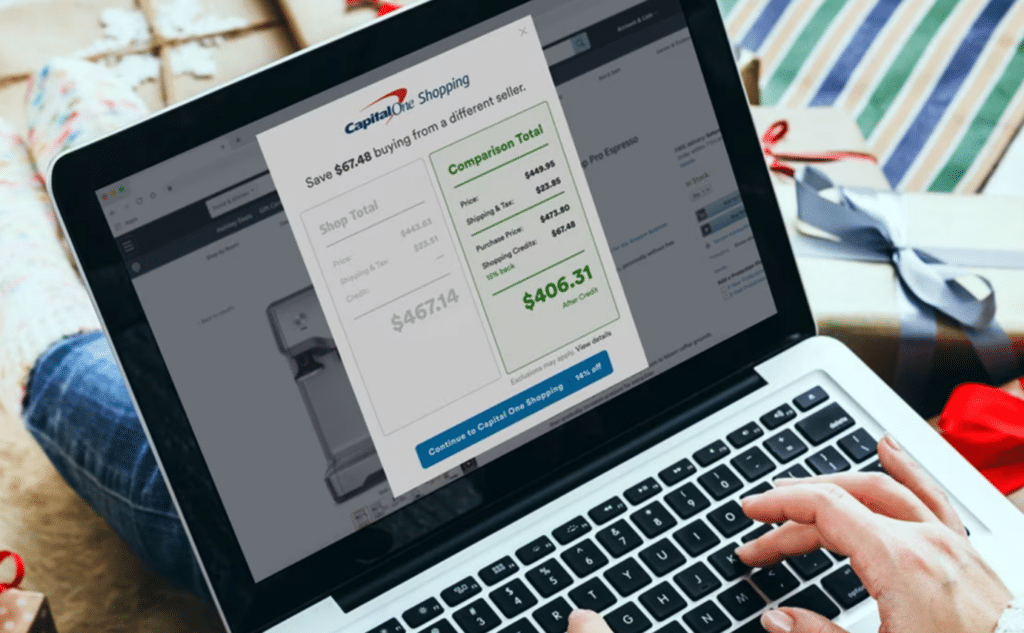
Beginning early this year, dozens of online content creators filed lawsuits against Capital One. Their later-consolidated case claimed that Capital One Shopping hijacks sales commissions that retailers offer to those who recommend the purchase of a product online. If online shoppers make a purchase via an affiliate link provided by an online influencer, that influencer can earn a commission. But if those same shoppers click on Capital One Shopping’s popup that offers to search the internet for any available coupons, Capital One Shopping becomes the referrer and claims any sales commission.
In the business, it’s known as “last-click attribution” – the last click that an online shopper makes, is considered to be the one that encouraged them to make a purchase. So the referrer who earns the last click, earns the full commission.
Many online influencers seemed surprised to discover this, when a viral video about the PayPal-owned Honey browser extension purported to expose the “scam” of last-click attribution late last year. That video, which claimed that coupon browser extensions were manipulating the system to their advantage, spawned a slew of lawsuits against the owners of Honey, Capital One Shopping, Microsoft Shopping, RetailMeNot, Rakuten, Klarna and Ibotta.
The plaintiff suing Ibotta ended up dropping that case. Microsoft seemingly capitulated by ending the coupon-finding tool altogether in its Microsoft Shopping feature. But Capital One made a forceful rebuttal, calling the litigation “a naked attempt to stifle competition in the marketplace.” The plaintiffs, they argued, wrongly claimed “they are ‘entitled’ to be paid the entire commission for an online sale if they had any touchpoint in a consumer’s purchasing journey,” when “it is up to merchants to decide who gets credit for a sale and how to distribute that credit… It is not ‘stealing’ if a merchant adopts an attribution model that gives a later-in-time publisher credit for a sale.”
Despite each side’s confidence in its respective position, the parties filed a notice yesterday with the federal court hearing the case, stating that they “have reached an agreement in principle to settle this dispute on a class-wide basis.” A settlement agreement will be filed with the court in the coming months for its approval. Terms of that proposed settlement were not disclosed.
But in its statement, Capital One emphasized that the agreement “does not contain any admissions of liability, fault, or wrongdoing,” and that the company is “confident that, if this case moved forward, the company would have prevailed on the merits.” Capital One also reassured users that the settlement will “not change how consumers can shop and save with the Capital One Shopping experience.”
It remains to be seen whether online content creators will see the settlement as a victory and a vindication for their complaints, or whether Capital One simply made the prudent decision to end the dispute now, rather than fight it all the way to trial. But many more plaintiffs and several more defendants will be watching closely – as the final word in this case, is far from the final word on the issue.
Image source: Capital One