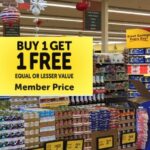
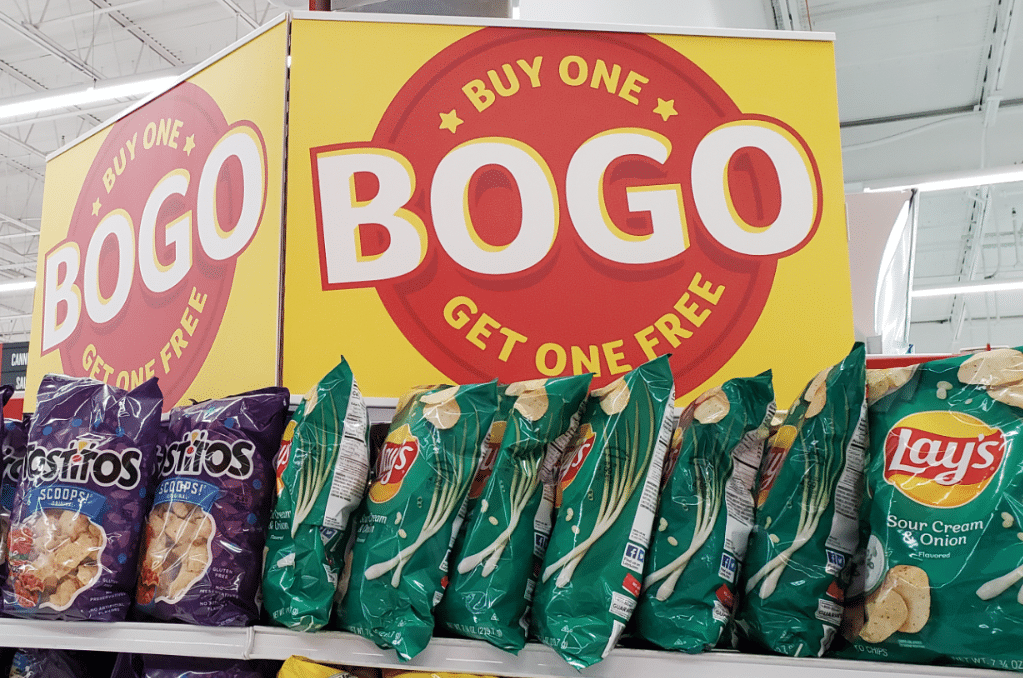
Shoppers have been complaining about it for years. A few have waged David-and-Goliath battles to stop it, with mixed results. Now, one state’s top law enforcement official is taking up the fight on shoppers’ behalf, taking aim at bogus BOGOs.
Washington state Attorney General Nick Brown has announced a lawsuit against Albertsons, accusing it of routinely offering “unfair and deceptive BOGO promotions” that have caused shoppers to be overcharged by millions of dollars.
At issue is whether the “free” item in a buy-one-get-one-free deal is actually free. At the 225 Albertsons-owned Safeway, Haggen and Albertsons stores in Washington state, Brown argues, they’re often not.
“When Defendants schedule a BOGO promotion, they artificially increase the price of the BOGO item in the run-up to the promotion, only to bring the price back down to the pre-BOGO level after the promotion is over,” the lawsuit alleges. These “price manipulations” cause shoppers to “pay substantially more for the first product to cover a portion of the cost of the second ‘free’ product.”
The lawsuit provides several examples, going back years. In one instance, it alleges that Safeway was selling mini watermelons for $3.99 back in 2021, but the store hiked the “regular” price to $5.99 for a BOGO promotion that began two days later. So instead of buying one for $3.99 and getting a second one for free, shoppers had to pay $5.99 for the first one in order to get the second for “free.” After the BOGO promotion ended, the lawsuit says the regular price went back down to $3.99.
In another example, in 2023, a package of hoagie rolls at Albertsons was selling for $3.39, until the “regular” price rose to $4.29 during a BOGO promotion. Afterwards, the price went all the way down to $2.49.
And in 2021, Albertsons was selling a jar of olives for $2.99, but “Defendant raised it a shocking 84% (to $5.49) for a BOGO promotion that started two days later,” the lawsuit states. “After the BOGO promotion ended, Defendants brought the price back down to $2.99.”
“As a result of this artificial price manipulation, consumers making purchases under these promotions are paying a premium and not truly getting a 1:1 free product as advertised,” the lawsuit alleges. Over at least a four-and-a-half-year period, the lawsuit says Albertsons overcharged shoppers in Washington state in more than three million transactions, earning nearly $20 million in the process.
“Consumers walk into these stores and think that they’re getting a bargain,” Brown said. “They’re being told that they’re getting a deal, but in reality, they’re just paying an inflated price for that first item.”
Albertsons has been the target of several proposed class-action lawsuits brought by shoppers in recent years. Three years ago, a Washington state woman sued, providing similar examples of how the retailer “routinely increases the regular retail price of items when offering them in BOGO sales.” A few months later, a California man filed a lawsuit of his own, providing even more examples.
Both of those cases went to arbitration, and both were ultimately settled with no admission of wrongdoing and no money changing hands. Albertsons had argued that what the shoppers claimed were the “regular” prices of the items in question before and after the BOGO promotions were actually sale prices, while the prices featured when the items were BOGO were the actual regular prices. One of the plaintiffs countered that the items were so often on “sale” that the lower price was the de facto regular price, and the so-called regular price that was featured in BOGO promotions was fictitious.
Just a few months earlier, Albertsons and its subsidiary Safeway agreed to settle a similar lawsuit in Oregon state, setting aside $107 million to refund customers who believe they were overcharged in buy-one-get-one-free sales. Without formally admitting wrongdoing, the retailer admitted in court “that it had inflated regular prices of some items during promotions,” but argued that shoppers were still getting a deal as long as the total price of two BOGO items was less than buying two items at the non-BOGO price.
In a statement responding to the latest lawsuit, Albertsons said “we engaged in good‑faith discussions with the Attorney General’s Office and strongly disagree with its claims, which are based on flawed analysis and data errors that we identified and raised.”
But Brown was not dissuaded. “We’re not going to stand for people getting fleeced by these deceptive practices,” he said. “We want to make sure we’re protecting people’s pocketbooks, and we all know that affordability is a major issue these days. We’ve got to push back when companies are misleading their customers.”
The lawsuit asks the court to declare Albertsons’ pricing practices to be in violation of state law, to put a stop to their “unfair and deceptive BOGO promotions,” impose penalties and provide restitution to millions of shoppers.
So whether it’s deceptive, or just an accepted business practice, this latest lawsuit may well serve as a warning – as you plan your shopping for the week and look over the latest BOGOs, be sure you know how much that “free” item is really costing you.
Image source: Coupons in the News