
When is a sale not a sale? When you raise the price of a product for a single day, only to lower it slightly the next day and call it a big discount.
Several American grocery chains have been accused of tinkering with their prices to offer fake discounts – most recently in Washington state, where the Attorney General sued Albertsons last month for offering “unfair and deceptive BOGO promotions” by “artificially increas(ing) the price of the BOGO item in the run-up to the promotion, only to bring the price back down to the pre-BOGO level after the promotion is over.”
Now a grocery chain on the other side of the Pacific is going to have to pay the price for similar pricing shenanigans.
The Federal Court of Australia has ruled against Coles, the country’s second largest grocery retailer, in a case brought against it nearly two years ago by the Australian Competition and Consumer Commission. And the consumer watchdog agency, equivalent to the U.S. Federal Trade Commission’s Bureau of Consumer Protection, says a severe financial penalty is in order.
The ACCC had accused Coles of making “misleading claims about illusory discounts” by briefly raising the regular prices on hundreds of items, then marking them down slightly and promoting it as a “sale.”
“Although lower than the temporarily increased prices,” the sale prices “were higher than, or the same as, the price at which each product had ordinarily been offered for sale prior to the temporary increase,” the court explained.
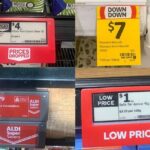
The ACCC cited 249 examples in which the “sale” price was higher than the previous regular price, and the “regular price” listed on the sale tag was charged for only a short period of time in the lead-up to the promotion – typically for about four weeks, and in one case, for a single day.
Coles had argued that it was “experiencing significant cost increases including, but not limited to, a surge in global commodity prices, and in the cost of packaging, freight, utilities and international shipping.” So it had no choice, it said, but to raise the regular prices of many items that had been offered as part of a long-term promotion. Later, it returned many of those items to the promotional program at a new, revised lower price.
The court was obliged to weigh in on how much “later” those new lower prices were introduced, and whether the “lower” prices really represented significant savings from what shoppers had been accustomed to paying.
The judge in the case cited Coles’ own internal policies that stated an item could not be featured with a “now” vs. “was” price tag unless the “was” price was in place for at least 12 weeks. By this standard, then, the judge concluded that the advertised discounts “were misleading because the relevant products were not sold at the ‘Was’ price stated on the ticket for a reasonable period and, as a consequence, the discount represented on the ticket was not genuine.”
“The ACCC will seek a substantial penalty, reflecting the importance of accurate pricing for consumers,” agency chair Gina Cass-Gottlieb said. “It is very important that a penalty is not just able to be dismissed as a cost of doing business, and that it becomes at a level that is a significant deterrent for such conduct.”
A former ACCC chair told Australia’s The Age newspaper that Coles’ penalties could run into the hundreds of millions of dollars. The outcome of a separate class action case brought by a Coles customer will determine if shoppers will be entitled to any damages.
Coles said it is reviewing the judgment, adding in a statement that “our priority has always been – and will continue to be – delivering value to our customers.”
Watching this case with great interest is Coles’ competitor Woolworths – the country’s largest grocery chain – which the ACCC sued in a similar, separate case that has yet to be resolved.
“The ACCC brought this case in the public interest,” Cass-Gottlieb said. “We understand how important it is for consumers to get value for their supermarket purchases, and decided to take action.”
And now shoppers will be able to rest assured that advertised sale prices represent real discounts – because one grocery chain now has hundreds of millions of reasons to ensure that, from now on, they really do.
Image source: Coles