Kroger was silent when asked how it planned to comply with a new law requiring in-store alternatives to digital-only deals. The retailer had nothing to say when Coupons in the News was first to report that it (coincidentally?) began to introduce paper versions of its digital coupons.
But with shoppers expressing their approval, and sales perking up as a result, Kroger seems to have plenty to say about it now.
“We are making it easier for nondigital customers to take advantage of all the value Kroger offers by reintroducing paper coupons in every store,” Kroger’s interim CEO Ronald Sargent crowed to investors last Thursday. “Our customers are recognizing these changes, and they’re giving us credit for them.”
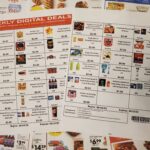
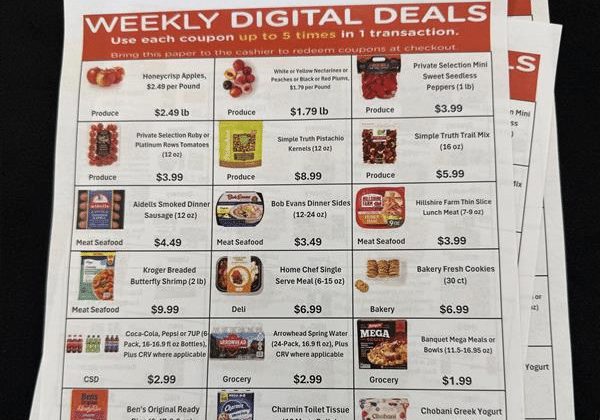
And Kroger appears eager to claim the credit. This spring, the grocer began offering printed “Weekly Digital Deal scan sheets” in stores. The printed sheets contain images of each digital coupon advertised in the weekly sales circular, with a single bar code that can be scanned at checkout to apply those deals to a customer’s order – no personal internet connection or cellphone required.
Kroger ignored numerous requests for comment from Coupons in the News at the time. It finally did issue a statement – to other media outlets that picked up on the story weeks later.
And now, months later, speaking about the subject publicly for the first time, Sargent made no mention of the grassroots consumer effort that led to a groundswell of support for alternative ways to access digital-only deals for shoppers who are not digitally-savvy. And he did not acknowledge the legislative efforts to force Kroger to do the very thing it’s now doing. Instead, he seemed happy to present the scan sheets as Kroger’s very own benevolent idea.
After speaking with “hundreds and hundreds” of Kroger customers across the country, “what you heard over and over again is that older customers are not as digitally proficient as maybe younger customers. And older customers are feeling like they want the same deals that the person with the smartphone is getting. And so we wanted to make them on an equal playing field,” Sargent said. “I think the other customer group that we weren’t responding to very well were people who don’t have a $600 iPhone, and those people also were a little bit disenfranchised with our digital coupons. So we’re really trying to appeal to a broader customer segment, not only people that are very digitally savvy, but also people who are not.”
The issue of “digital discrimination” first gained traction three years ago, when a coalition of consumer groups called on major grocery chains to make their digital-only deals more accessible, and shared their effort with the media. That media coverage got lawmakers’ attention, as several states introduced legislation that would require grocery stores to offer paper versions of all digital coupons. Those efforts faltered, but support for the idea never really did, as San Diego ultimately became the first jurisdiction in the country to pass an ordinance mandating non-digital ways for shoppers to access the digital-only deals that only tech-savvy shoppers can currently claim.
And it just so happens that Kroger’s scan sheets first showed up mere weeks after San Diego passed the initial version of its ordinance. That ordinance is now due to take effect in October, making Kroger the first grocer doing business in the city to preemptively comply with the law.
Whether or not Kroger acted on its own initiative or under duress, the retailer appears happy with the results. “We’re measuring customer feedback on this, and we’re getting good feedback,” Chief Financial Officer David Kennerley told investors. “The way that we’re looking at these paper coupons, is it generating (a sales) lift? And I think it is.”
Kroger could use all the help it can get, as it goes through a tumultuous time. While sales and profits are up, the retailer is still building out a new leadership team after the unexpected – and, as yet, unexplained – resignation of former CEO Rodney McMullen over his “personal conduct” back in March. Kroger has also closed dozens of underperforming stores, and laid off nearly 1,000 corporate office employees.
But a sharper focus on prices and promotions – which includes those digital deal scan sheets – is apparently helping to attract and retain increasingly price-conscious customers. “Customers are feeling pretty stressed about the economy. They’re doing things to save money,” Sargent said. “Low- and middle-income households are really looking for deals. They’re using coupons more. They’re making smaller but more frequent trips and they’re buying more private label products.”
So he said Kroger is “making our promotions simpler” by “reducing complex promotional offers.” And it’s lowered everyday prices on more than 3,500 items so far. “I think our customers are responding to simpler promotions, lower prices, better service, cleaner, less cluttered stores,” he said.
And it appears they’re also happy about digital coupons that are printed on paper. No matter whose idea it really was.
Image source: San Diego councilmember Sean Elo-Rivera